1.
They find you
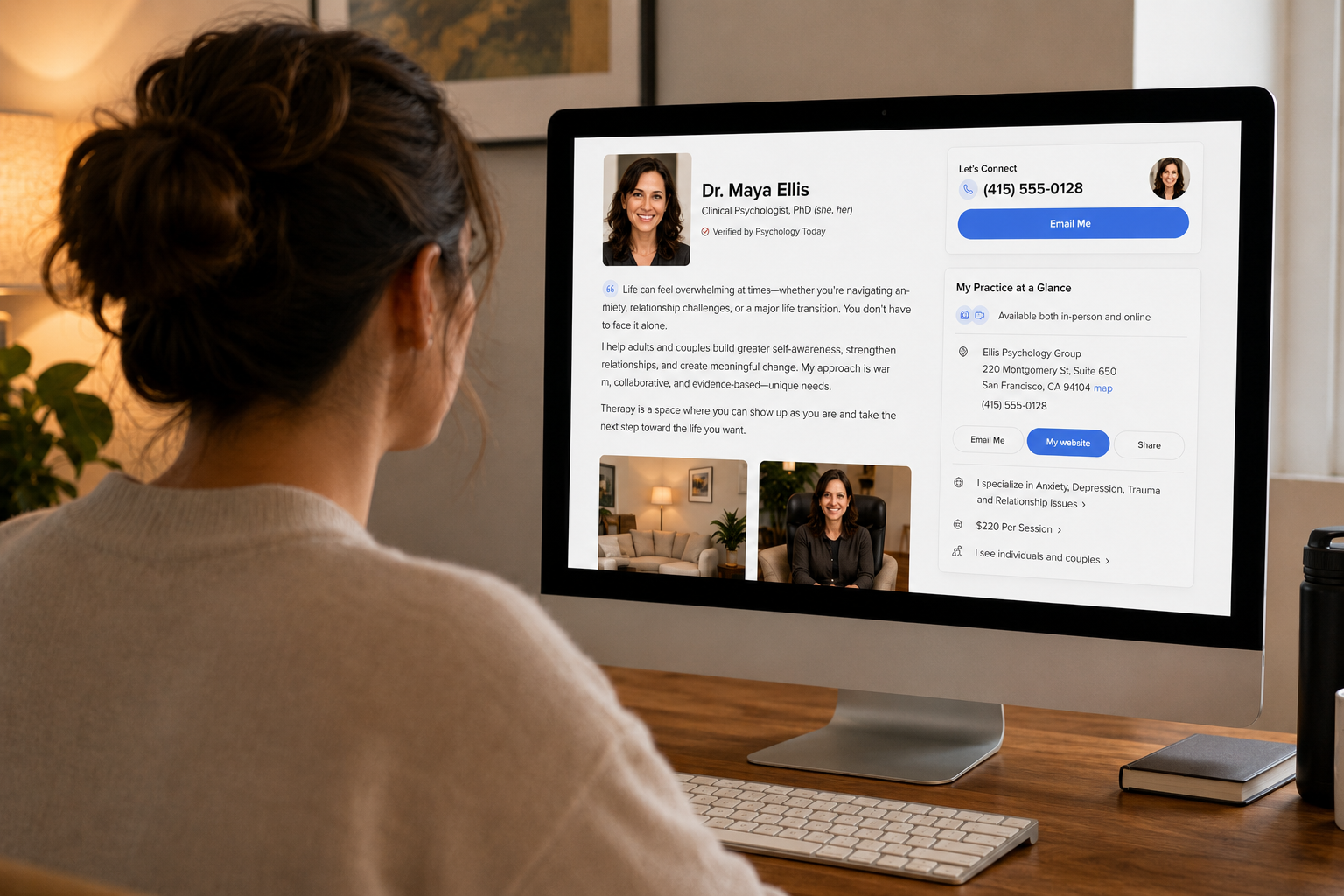
Psychology Today, Google, referrals, directories, or ads bring them to your practice.
People finding you through Psychology Today, Google, Instagram or ads are looking for help with a specific condition, like anxiety. Sending them to a specialty-specific page that mirrors their internal monologue instead of a generic website homepage gets you more right-fit clients.
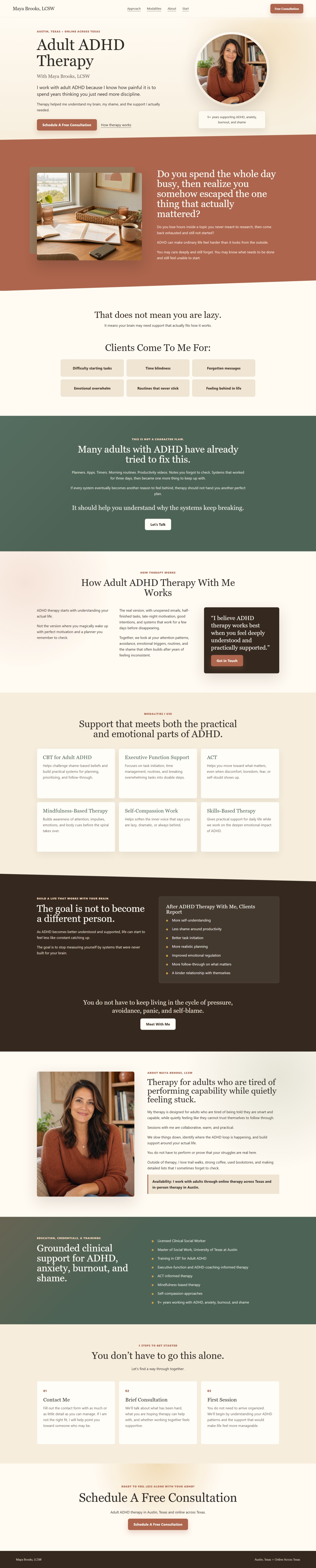

USE A SPECIALTY PAGE
50% more inquiries
Compared to a generic website homepage
THE HIDDEN LEAK
Good traffic can still slip away.
Psychology Today, Google, referrals, directories, or ads bring them to your practice.
They land on a homepage with credentials, services, insurance details, and general information.
They are silently asking, “Does this therapist understand what I’m actually dealing with?”
A focused page mirrors their specific condition, doubts, fears, and internal monologue — so they feel understood before the fit call.
THE TOMPRECISION METHOD
We look for the overlap between what you enjoy working with, who you have helped before, and what people are actively searching for in your area.
The page is not a broad list of everything you treat. It is focused around one specific condition, search intent, and emotional problem.
The copy puts the client's hard-to-explain experience into words, creating the feeling that you understand them before the first call.
“This therapist gets me.”
Where the right-fit client feels seen, they are more likely to reach out with clarity, confidence, and stronger willingness to book at your full fee.
CHOOSING THE RIGHT SPECIALTY
The clients and concerns you actually want more of.
The issues you have helped people move through.
There is active demand through Google and local search.
The best page sits where all three overlap.
COMMON QUESTIONS
A few practical details therapists usually want to understand before adding specialty pages to their website.
Book a fit call and we’ll help you identify the strongest starting point.
Book a fit callYour specialty page is usually added to your existing website, not built as a disconnected site. It should feel like a natural part of your practice, with your branding, voice, contact details, and booking flow.
Ideally, it is hosted on your existing website, usually as a page like /anxiety-therapy, /adhd-therapy, or /couples-therapy. That keeps the experience connected to your practice and easier for visitors to trust.
Yes. The page should match your colors, typography, tone, and overall website feel — while making the message more specific to one client concern.
Yes. The page should sound like you, not like generic marketing copy. The goal is to translate your clinical understanding into language your ideal client recognizes.
Start with one strong page first. After that, we recommend one page for each in-demand specialty you genuinely want more clients for.
We look for the overlap between what you love working with, what you have real experience helping with, and what people are already searching for.





